New WEF report highlights AI’s energy efficiency potential in Azerbaijan
A joint report by the World Economic Forum and 4SIM shows that artificial intelligence can reduce energy consumption in commercial buildings by up to 25% and significantly lower emissions.
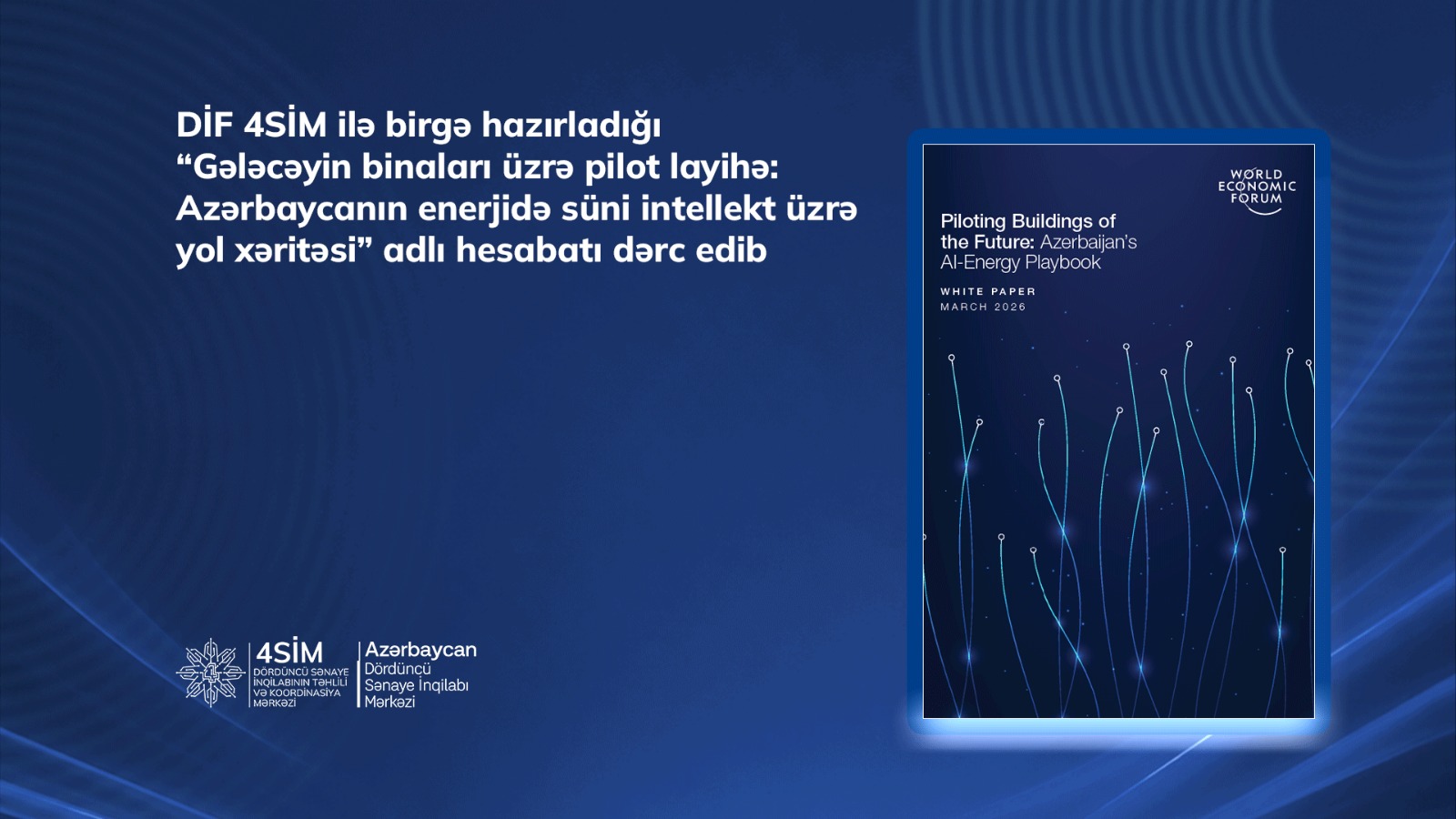
A new report titled “Piloting Buildings of the Future: Azerbaijan’s AI-Energy Playbook” has been published as a result of a pilot project carried out jointly by the Center for Analysis and Coordination of the Fourth Industrial Revolution under the Ministry of Economy and the World Economic Forum, within the framework of the Forum’s AI in Energy initiative led by its Centre for Energy and Materials.
The report assesses the potential application of artificial intelligence technologies in commercial buildings, one of the sectors with the highest energy consumption in Azerbaijan, and presents a practical roadmap for advancing this agenda.
The findings show that, in buildings with suitable infrastructure, the deployment of AI solutions has the potential to reduce energy consumption by up to 25% and lower carbon emissions by 20–40%. At the same time, the payback period for investment in such buildings is estimated at 6 to 18 months, confirming the strong economic viability of this approach.
The report notes that buildings account for a significant share of Azerbaijan’s overall energy consumption, and that optimizing this sector can play an important role in achieving the country’s climate goals.
Based on real pilot experience, the report highlights several key priorities:
- adapting global AI solutions to local infrastructure and market conditions;
- establishing effective cooperation between the public and private sectors;
- developing a roadmap for scaling pilot projects to national-level implementation.
The report also emphasizes the strategic importance of artificial intelligence not only for improving energy efficiency, but also for accelerating digital transformation, supporting the development of the green economy, and strengthening the country’s international competitiveness.
Drawing on practical implementation experience, the document identifies key technical, institutional and regulatory barriers, proposes solutions to address them, and provides practical recommendations for large-scale deployment. It also underlines that coordinated action among public institutions, businesses and technology providers is essential for the effective application of AI in the energy sector.
This initiative demonstrates Azerbaijan’s openness to innovative approaches in energy efficiency and has the potential to position the country as one of the regional frontrunners in applying the concept of smart and low-carbon buildings.
Full report: https://reports.weforum.org/docs/WEF_Piloting_Buildings_of_the_Future_2026.pdf)