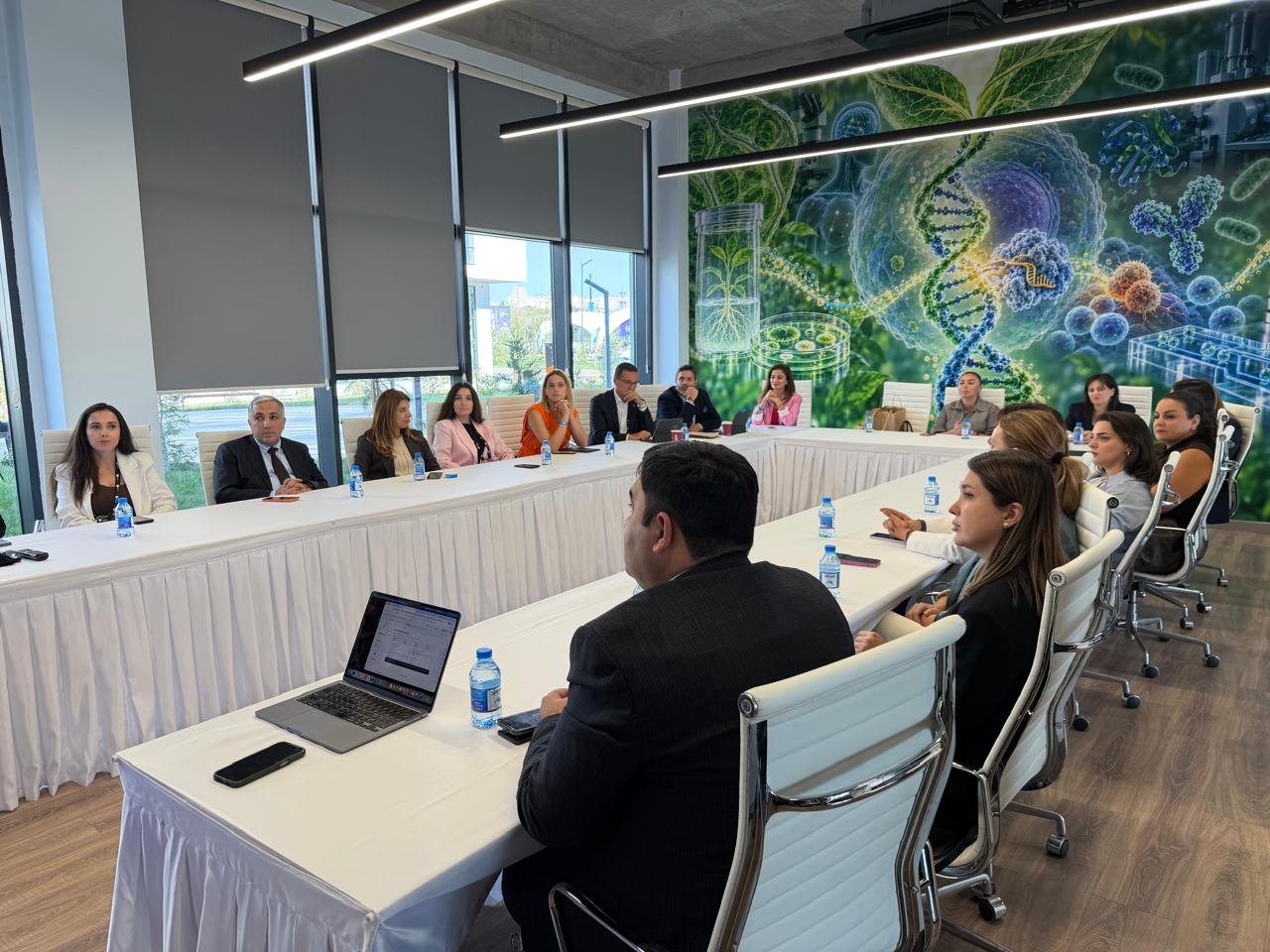
Representatives of partner organizations of the 4IR Academy – Nation Program came together at Baku ID 2026 to discuss the impact of artificial intelligence and rapid technological change on the workforce, future skills and lifelong learning.
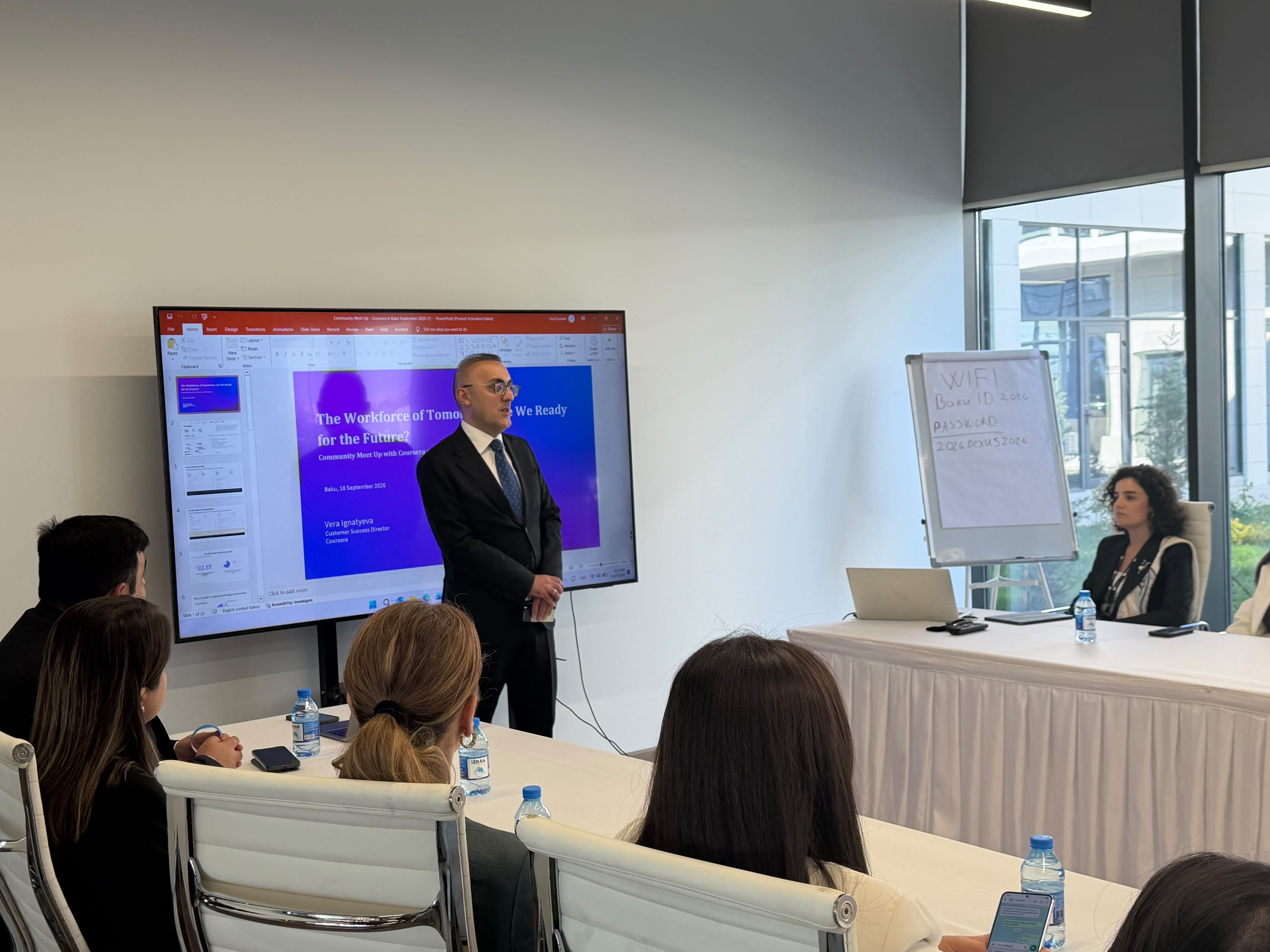
As part of the Baku ID 2026 Innovation Festival, the Center for Analysis and Coordination of the Fourth Industrial Revolution (4SIM) under Azerbaijan’s Ministry of Economy convened representatives of partner organizations of the 4IR Academy – Nation Program for a discussion titled “The Workforce of Tomorrow: Are We Ready for the Future?”
The meeting focused on the impact of artificial intelligence and accelerating technological change on the labour market, emerging skills needs, organizational readiness and new approaches to upskilling and reskilling.
Soltan Bayramov, Deputy Executive Director of 4SIM, highlighted the implications of technological transformation for the world of work and the importance of preparing for the future labour market. He noted that rapid technological development is not only creating demand for new skills across professions, but is also requiring organizations to rethink their approaches to workforce planning, employee development and lifelong learning.
The discussion also highlighted the role of collaboration with partner organizations under the 4IR Academy – Nation Program in strengthening digital skills and supporting the development of human capital.
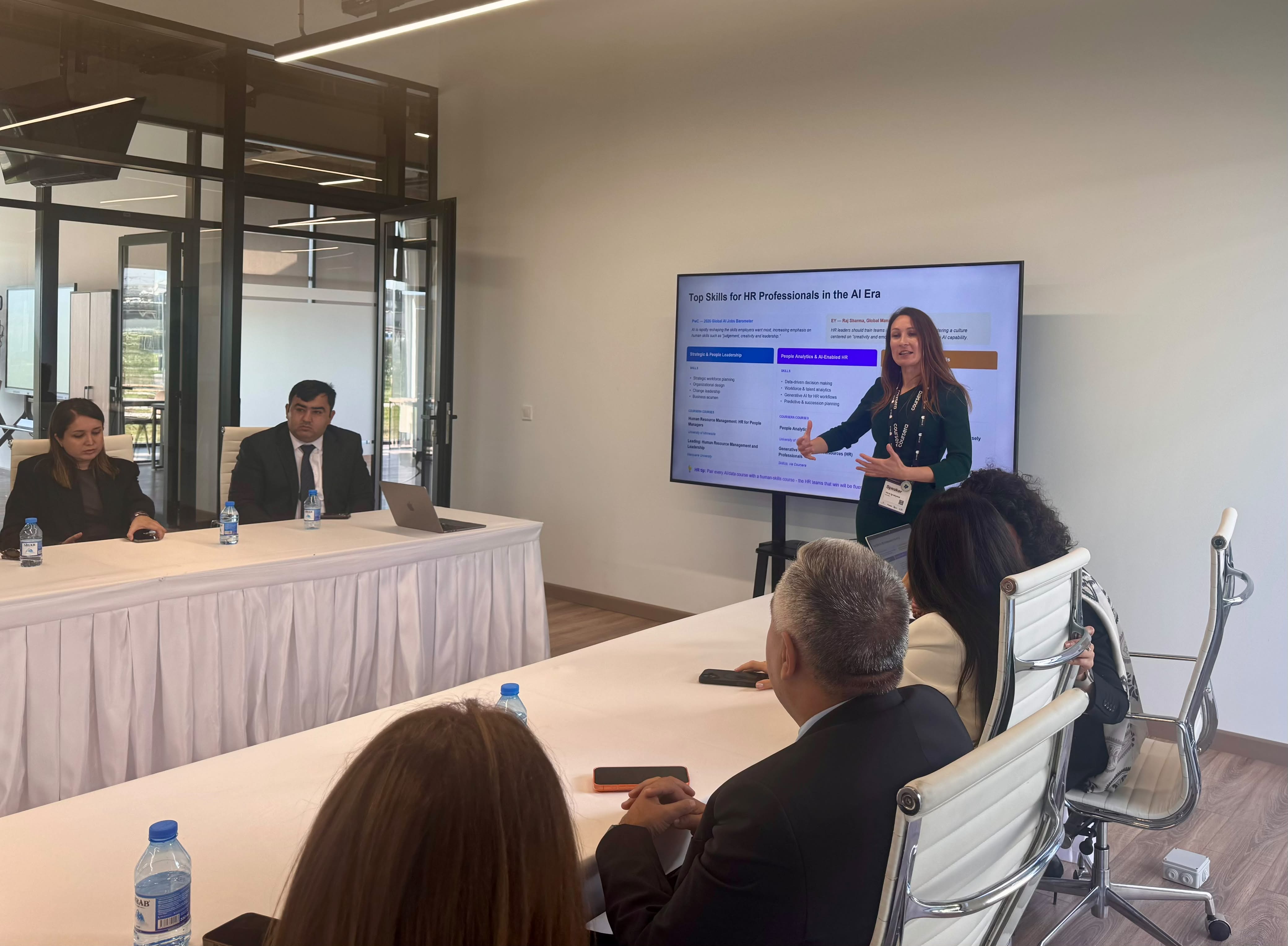
Vera Ignatyeva, Global Skills Expert at Coursera, presented global trends in the most in-demand skills, the impact of generative artificial intelligence on occupations, approaches to reskilling and upskilling, and international practices for fostering a culture of lifelong learning.
Mustafa Kesim, Workforce and Rewards Leader for Türkiye, Eastern Mediterranean and the Caspian Region at Mercer, discussed the growing importance of skills-based talent management, strategic workforce planning and continuous employee development in helping organizations prepare for future workforce needs.
Alison Eaglesham, Action Lead for the World Economic Forum’s skills initiative, shared insights from Forum research on how artificial intelligence and other technological shifts are expected to reshape jobs, skills and recruitment practices towards 2030.
The event also featured an interactive survey among participants. The survey gathered insights on organizations’ current approaches to skills development, employee learning practices and priority areas for strengthening human resources capabilities.